
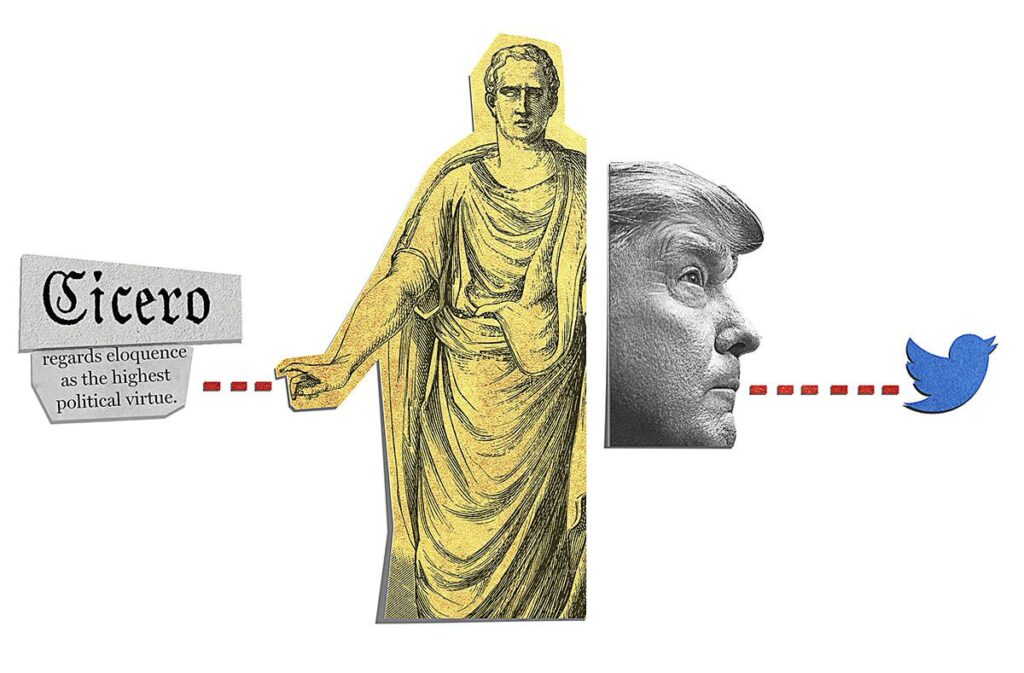
In the first chapter of our textbook, we go into detail about a few key terms that we will use throughout the year. Rhetoric, digital, and text. We went in-depth about the different kinds of rhetoric, comparing classical and contemporary. The book goes back to the first definition of rhetoric, which is “The practice of Oratory, the study of strategies of written or spoken to inform or persuade.” It is then further defined by “the art of finding out the available means of persuasion for a given argument.”
This chapter helped me understand that this subject goes way back. Our history is tightly interwoven with our rhetorical history. Everything that we have written down in our history books was at one time said out loud in the public sphere. It is easy to see what has been done in the past and take note and move on, but I think this chapter helped me understand how we have to look at the way things were done in the past so we can see where they fell short, and then expand upon it now in the present. This process of defining rhetoric is ongoing I think. As we add the definition of digital rhetoric, I believe our children will have to learn a new definition in addition to digital. This expansion happens in all subjects as new information is found and written down, but right now the information is being spoken, it is not yet written down.
One quote that stood out to me from the text was “defining a concept is a limiting activity. Trying to establish a common meaning can have the effect of excluding enriching diversities.” This quote lit up light bulbs in my head. I think our culture is too focused on labels, titles, pronouns, and what we call things. A common meaning can help people come to a common understanding, but is a common understanding a good thing? I believe that everyone should form their own understanding. When people rely on definitions given to them by other people, they are giving up their authenticity, they are giving up their own power to create. Our first reaction when being told some form of knowledge should be to question it. Questioning authority is the only way progress can be made and when people stop questioning authority the power in charge will take full advantage and overstep.
The chapter goes into great detail about digital rhetoric too, and digital identities. Digital identities are very prevalent in our modern social media culture, and forming and cultivating this is something that will probably be taught in school eventually since this seems to be the way our culture is heading.